
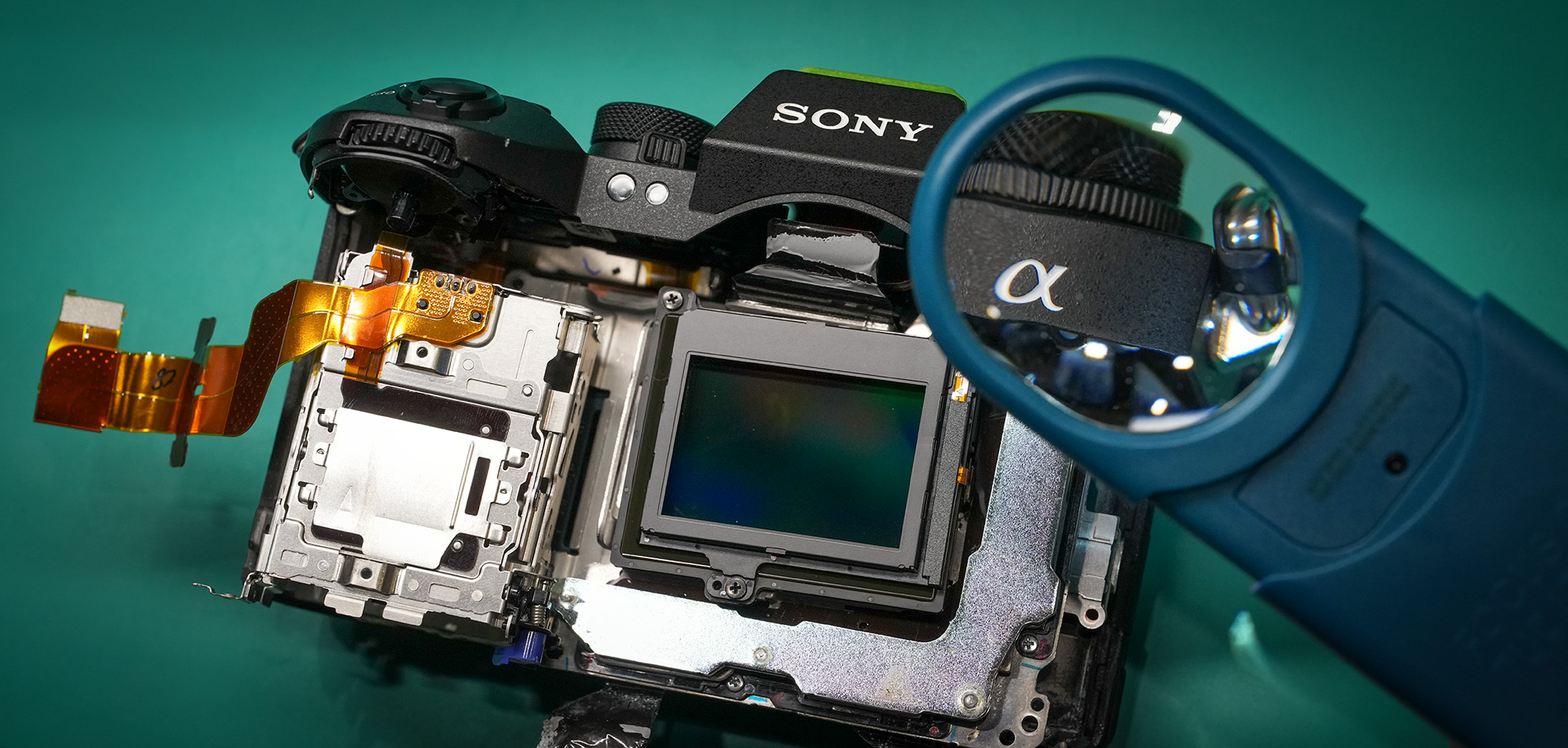
The heart of the image is Sony’s Image Verification, the image sensor.
Never has photography come under such scrutiny, especially in photojournalism and sports photography. In its history, photography has been manipulated as early as 1846. Still, the launch of Adobe Photoshop in 1987 marked a major shift in the ease of photo manipulation and by the 90’s, the term “photoshopped” generally came to mean a photo was altered to mask the truth. Here at the Olympics, there are no exceptions to heavily photoshopped or AI-generated images, which mostly end up on social media channels.
Today, with AI image generators for both still and Video photography, all imaging is suspect. Protecting the truth in imaging is a struggle for photographers and news publications alike. And it is completely taking over social media with a new term, “AI slop“.
The photojournalism industry today is bombarded with Photoshop manipulations and AI-generated manipulated images. They come from many sources, including social media, government agencies, freelance photographers, political parties and others.
As a photojournalist and sports photographer, it’s becoming increasingly important to demonstrate the integrity of the images I take as a San Diego-based photographer Randy Dible recently found out about this in a PetaPixel article.

Camera manufacturers and imaging software development companies all play a role in producing authentic imagery, and the demand for verifiable data is growing. Groups like C2PA, IPTC, Sony Image Authentication and Camera Bits are all stepping up to take on the cause of truth in imagery. There are really three parts to this:
- The moment the image is captured.
- Protecting the provenance chain of the image’s handling through the photo processes.
- The certification that news organizations and others want to reveal to customers when displaying images? (This is still a work in progress.)
Sony Image Verification
The key to all this is to start at the point of capture in the camera. Sony cameras can have a license installed that generates a “birth certificate” for each captured image. All captured data is documented in a Sony Camera Verify Report.
This report contains extensive information on camera settings, a low-resolution preview of the image before editing, and a 3D analysis of the image.
With a Sony License installed in my cameras here in Milan, if a question arises about one of my images, I can generate a “Birth Certificate”. That will provide all the information about the moment of capture and more. Have a look at some of the images below with the Sony Image Validation Report.
Mouse click on the image to see the Sony Camera Verify Report
USA’s Madison Chock and Evan Bates on route to winning a Silver Medal during the Free Dance competition at the event at the Milan Cortina 2026 Winter Olympics in Milan. #sonyalpha1mII #sony300mmGM #sonyauthenticatedimage #authenticphotography #GenuinePhotography #SonyKeepingItReal


Spain’s Olivia Smart shows off an Olympic Rings tattoo during the Figure Skating Ice Dance final at the Milan Cortina 2026 Winter Olympics. #sonyalpha1mII #sony300mmGM #sonyauthenticatedimage #authenticphotography #GenuinePhotography #SonyKeepingItReal #Photojournalism #sportsphotographer #MilanoCortina2026 #OlympicGames #OliviaSmart #OlympicRingsTattoo
An excited Canada’s Piper Giles and Paul Poirier during the Free Dance Team Figure Skating event at the Milan Cortina 2026 Winter Olympics in Milan. #sonyalpha1mII sony300GM #sonyauthenticatedimage #authenticphotography #GenuinePhotography #SonyKeepingItReal #Photojournalism #sportsphotographer #MilanoCortina2026 #OlympicGames #TeamCanada #PiperandPaul #pipergilles #pauldpoirier


Canada’s Jane Channell flies down the Skeleton track, with the Bell Tower of Cortina, built in 1846, in the background at the Milan Cortina 2026 Winter Olympics in Cortina, Italy. #sonyalpha1mII sony50150f2GM #sonyauthenticatedimage #authenticphotography #GenuinePhotography #SonyKeepingItReal #Photojournalism #sportsphotographer #MilanoCortina2026 #OlympicGames
Austria’s Women’s Double Luge Team, Lara Michaela Kipp and Selina Egle, look like they are on fire in their uniforms as they compete at the Milan Cortina 2026 Winter Olympics in Cortina, Italy. #sonyalpha1mII #sony2870mmf2 #sonyauthenticatedimage #authenticphotography #GenuinePhotography #SonyKeepingItReal #Photojournalism #sportsphotographer #MilanoCortina2026 #OlympicGames
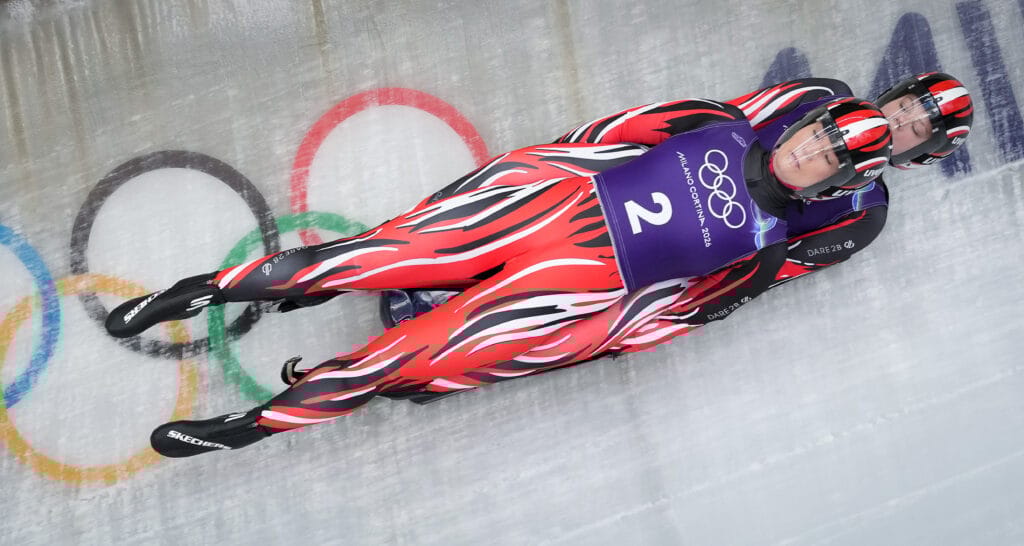
Photo Mechanic the Metadata Master
The key to image validation starts with camera capture. Still, the issue is how to handle Metadata within a fast, modern workflow from image capture to tracking changes without breaking the C2PA provenance through to output.
Photo Mechanic has a tool in development to protect all this important metadata along a workflow. Photo Mechanic, developed in the late 1990’s along with digital photography, has long been an industry-standard download, add-metadata photo browser, and sending tool used by photographers, photojournalists, and news outlets worldwide.
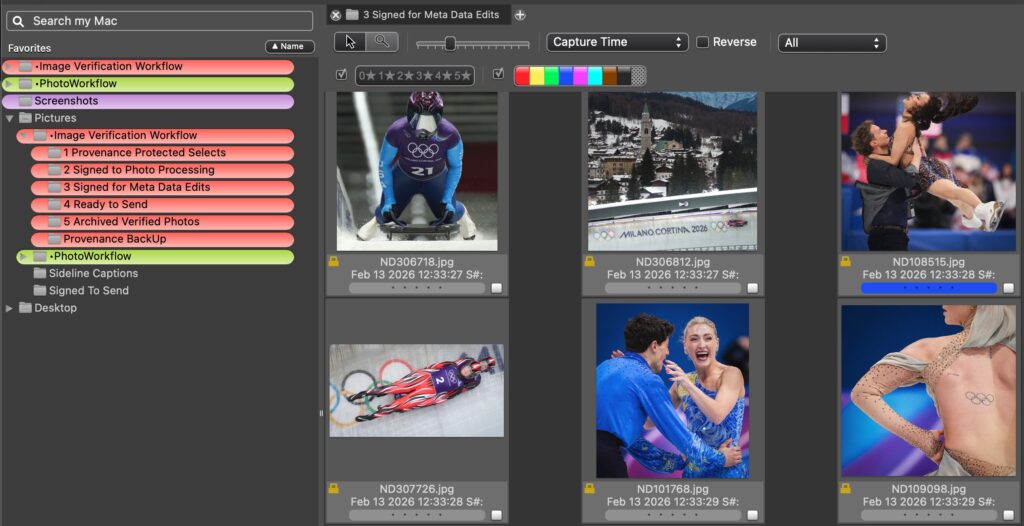
Maintaining a validated photo workflow is a challenge. Photo Mechanic is proving to be a key component to this, with its ability to maintain and update a valid C2PA provenance chain from Image capture to output, so that editors can validate a real image with confidence.
For example, these images above from the Olympics followed a strict workflow.
- With my Sony cameras, I install the Digital Signature Licence and a C2PA certificate. All images I capture are issued a “birth certificate” and the start of the C2PA provenance chain at the time of capture. I can send this directly from the camera, or to an editor or download the images to my laptop.
- On my laptop, I use Photo Mechanic (Beta) to download and attach IPTC/XMP information, which I can then edit metadata, such as tagging, ratings, captions, and cropping.
- After signing a photo, I can launch Photoshop, work on the image, and export it, signing it in the process with the Adobe Certificate and tracking the editing changes with C2PA provenance.
- Finally, in Photo Mechanic (Beta), I can make Metadata changes to normally captioned data before sending it to a client.
C2PA (Coalition for Content Provenance and Authenticity)
With my Sony cameras, I can install the Digital Signature Licence and a C2PA certificate. All images I capture are issued a “birth certificate” and the start of the C2PA provenance chain at the time of capture. I can send photos directly from the camera to an editor or download images to my laptop.
On my laptop, I use Photo Mechanic (Beta) to download and attach IPTC/XMP information, which I can then edit metadata, such as tagging, ratings, captions, and cropping.
After signing a photo, I can launch Photoshop, work on the image, and export it, signing it in the process with the Adobe Certificate (or other C2P2-compliant software) and tracking the editing changes with C2PA provenance.
With a Sony camera license installed, you can then install a certificate that enables C2PA to track changes throughout capture and editing, including updates to metadata information. Things like tracking edits that were made in a supported image editor and metadata editing in applications like Photo Mechanic.
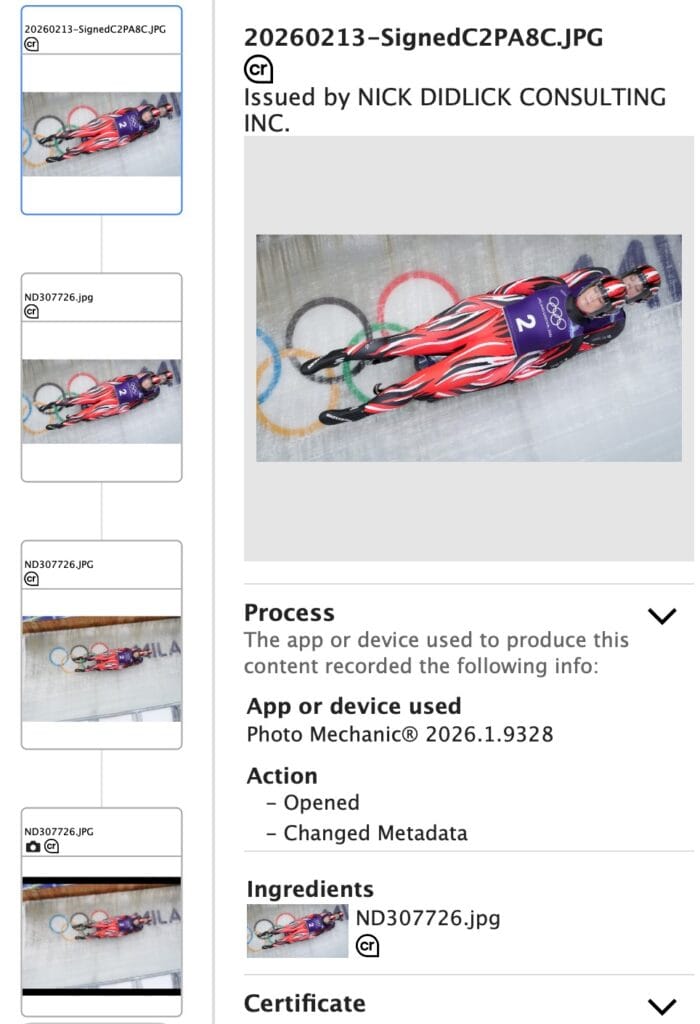
The C2PA Provenance chain, with thumbnails on the left starting at the bottom, is displayed.
- Sony camera image capture.
- Photo Mechanic metadata editing.
- Photoshop Editing
- Photo Mechanic metadata updates to files and delivery to clients.
International Press Telecommunications Council (IPTC) Metadata
IPTC was formed in 1965, and in the early 1990’s, the Information Interchange Model (IIM) was developed by IPTC to expedite the international exchange of news among newspapers and news agencies. Fundamentally, it is considered an industry standard for identifying ownership, managing digital assets, and ensuring proper licensing of photos. It includes fields such as captions, keywords, creator, and location, which are essential for embedding in visual media.
Today, the Extensible Metadata Platform (XMP) has more data fields and is used for more than just photography, including text and graphics. But it does include IPTC core information and is more commonly referred to because of IPTC’s universal acceptance among photographers worldwide.
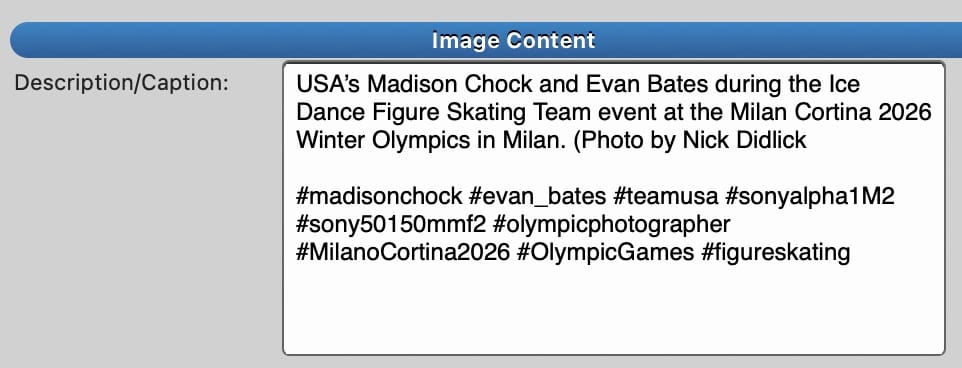
It’s important to know that IPTC (basically caption information) and XMP (things like camera and caption data) are included in Image Verification and can be updated with Photo Mechanic along the process.
This Metadata is fragile and can be corrupted or tampered with during a workflow, resulting in an image verification failure.
All this technology to prove an image’s integrity is complex and rapidly changing. Still, change is normal for photographers and news organizations alike, who no longer find that their reputations are enough to gain readers’ and viewers’ trust.
In the popular TV Series, The X-Files, “Mulder, the truth is out there,” says FBI Special Agent Dana Scully. “But so are lies.”
This is especially true in today’s visual world; never in the history of the visual world we live in has truth in reporting been so important.
– 30 –